



Decided to use branded stickers in your marketing? Excellent idea! These small, affordable, and easily shareable message carriers offer an opportunity to significantly increase your brand's visibility and recognition. When stickers end up on many surfaces, many people will notice them.
The question is simply how to create a branded sticker that people actually want to stick on their personal items? A successful sticker isn't just a logo printed on a sticker; it has to evoke an emotion. The smarter and more imaginative the design, the more likely the sticker is to end up in visible places.
In this article, you'll find practical tips on how to create branded stickers that won't be left gathering dust in a cupboard, but will travel with your users and gain you recognition.
Know your user
A great branded sticker design starts with understanding who will be using it. By designing a sticker with a specific user in mind, the likelihood increases that it will end up on their phones, laptops, water bottles, or backpacks.
Younger people are generally more open to sticking decorative stickers on their belongings. They see stickers not just as advertising, but also as a modern accessory and an opportunity to express their personality. Older people are often more conservative and are far from being as open to sticking all sorts of stickers on their items.
The more imaginative, playful or funny a sticker is, the more likely it is that the target audience will use it and want to show it to others. You definitely cannot limit yourself to just the logo or place your brand centre stage. The priority must be an interesting, funny or motivating slogan, with the brand's symbolism designed around it. A sticker designed in this way is an advertising medium that has a good chance of actually being used.
The brand sticker should be simple and clear
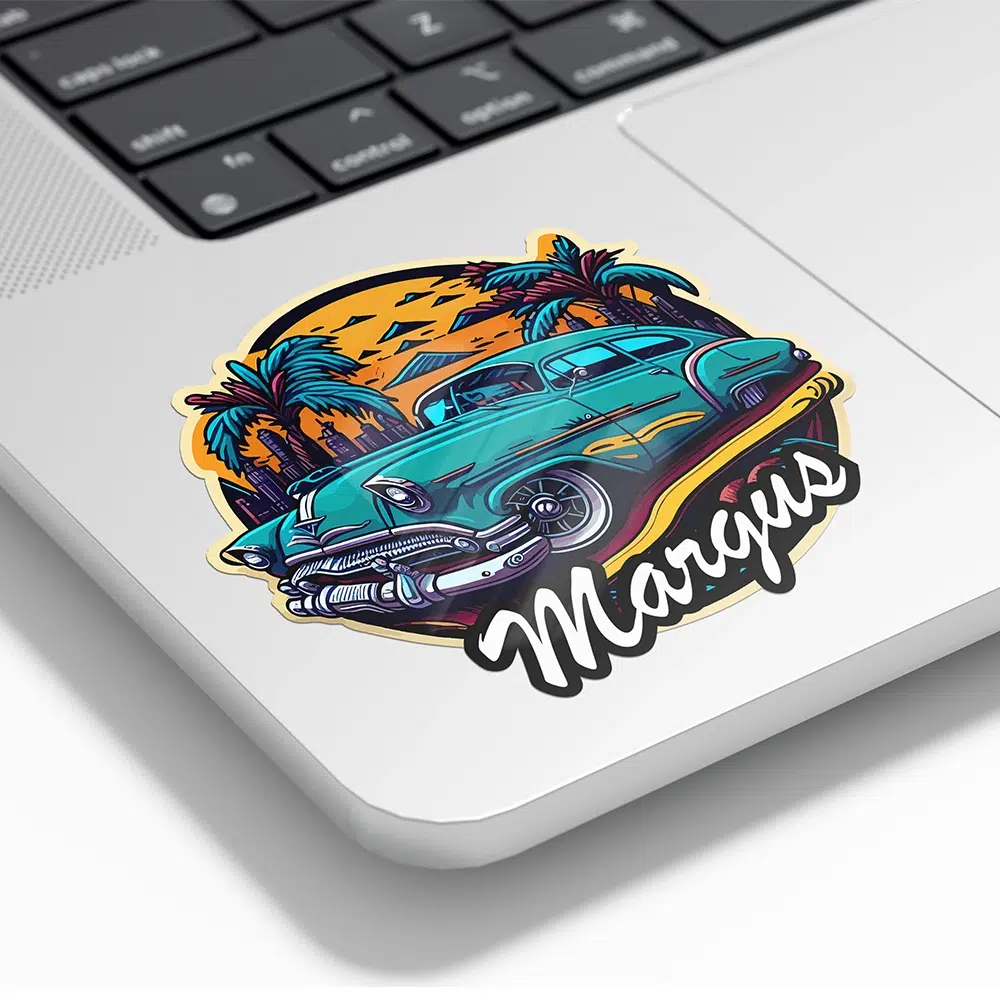
The surface of a branded sticker is limited – its size usually falls between 8–12 cm. Therefore, there isn't space for complex designs or lengthy stories. The secret to a successful sticker is simplicity and clarity. Focus on one main message or visual element and don't try to convey the entire brand story with a single sticker.
Too much information or an abundance of detail makes a sticker confusing and reduces the likelihood of people using it. Focus on what is striking and easily understandable. A good example is an engaging illustration or a funny slogan around which brand symbolism is placed. This approach turns the sticker into an eye-catching and memorable advertising channel.
Emotion and creativity
The best branded stickers work because they evoke emotion. If a sticker makes someone chuckle or feel understood, they're much more likely to want to use it and show it off. A good branded sticker gives people a little emotional “win” – it allows them to express their sense of humour or their values. When the target audience feels that the sticker expresses something about them, it spreads quickly and far.
Therefore, a creative approach to sticker design is paramount. A clever pun, a humorous illustration, or a catchy slogan can transform an advertising medium into a design element. At the same time, creativity must remain within the boundaries of the brand's image. A sticker is not an anonymous joke on the internet, but your company's name and image. A provocative, offensive, or controversial message may indeed attract attention, but not necessarily the kind that the brand wants for itself.
Hi Brand sticker Find a balance. It's playful and memorable, but simultaneously fits the company's values and tone.
Use brand colours
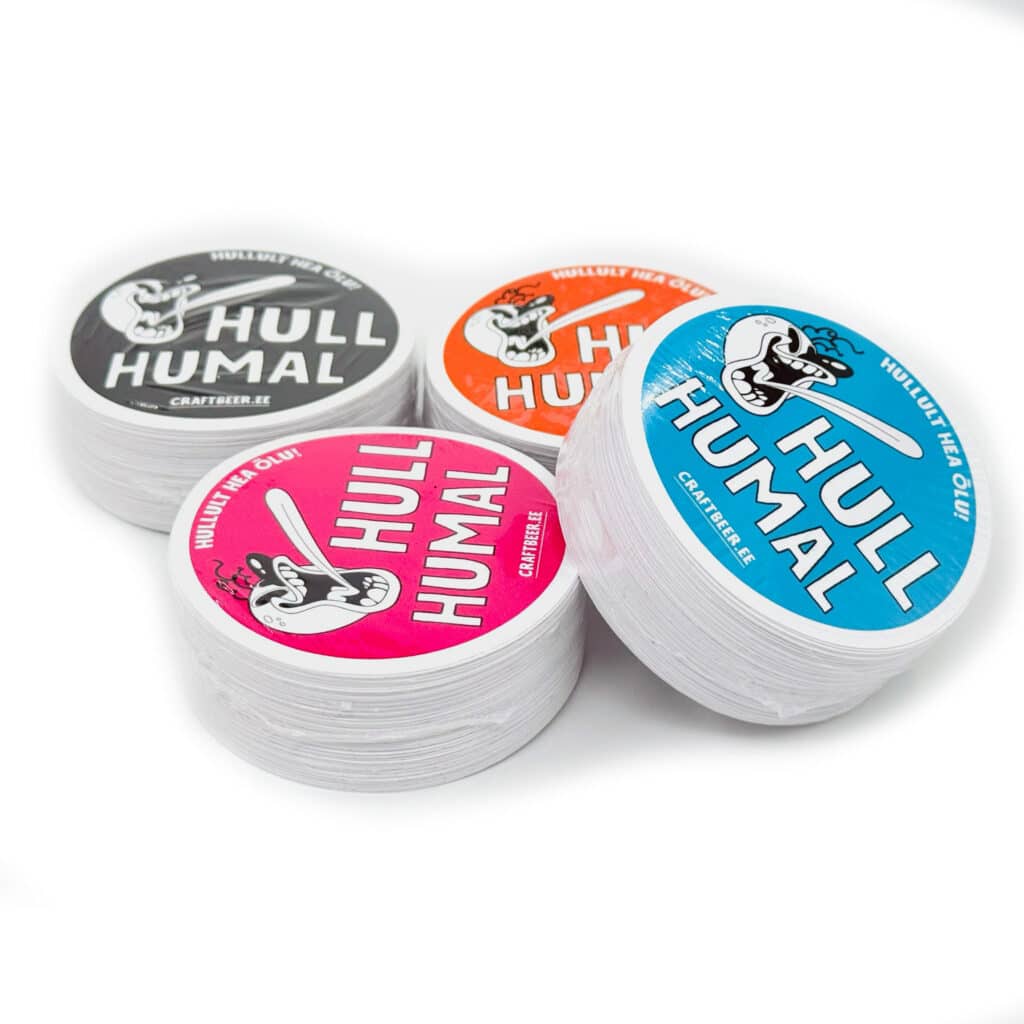
The brand sticker must be recognisable and fit with the company's visual identity. Therefore, it is most natural to use the company's colours in the design.
It is also worth considering how the advertising sticker will look on different surfaces. If the design is too dark or has low contrast, the sticker may simply disappear on a dark surface. Contrasts, a clear background, or an outline around words or design help to solve this problem.
What makes a promotional sticker special
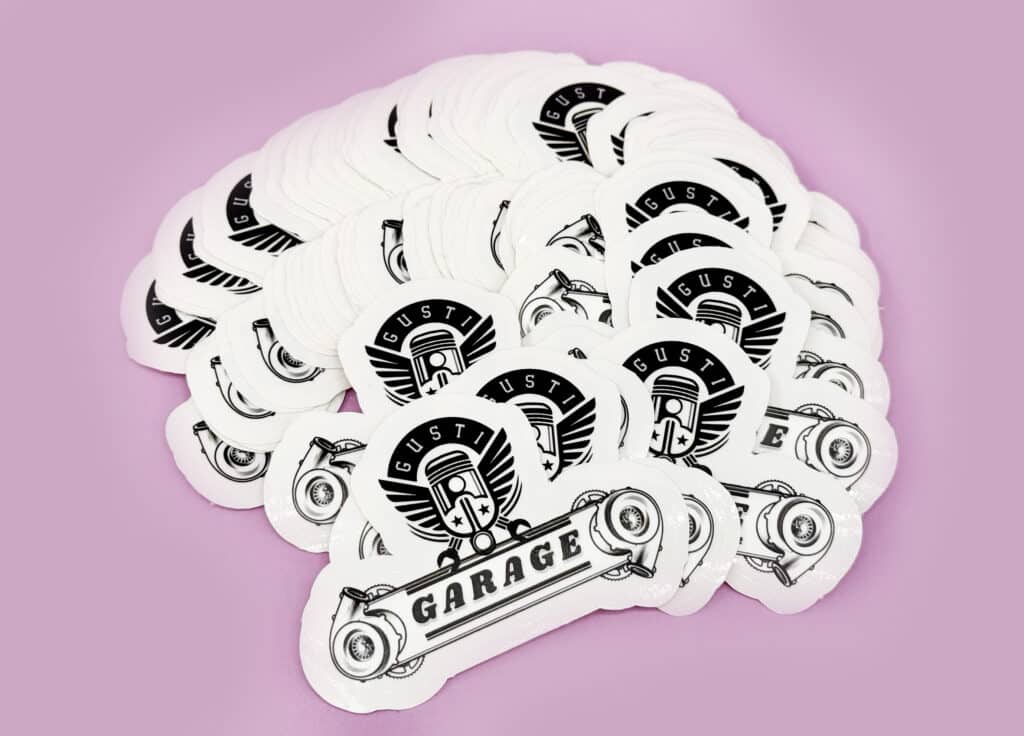
The company's sticker plays a bigger role than one might initially think. Most stickers are round or rectangular, as they are easy to design and print. However, in reality, a special shape can easily give a sticker character and individuality.
The shape of the sticker can follow, for example, the contours of a logo, the silhouette of a character, or some other design element. Just remember that an irregularly shaped sticker must also remain simple and clear. Very fine details may not be visible on a small sticker. The best result is achieved when the shape supports the design and helps to highlight it better.
The size depends on the purpose: small ones (3–5 cm) are ideal giveaway’deks for events etc., larger ones (5–10 cm) are suitable for marking equipment or vehicles.
One more little tip – the sticker material
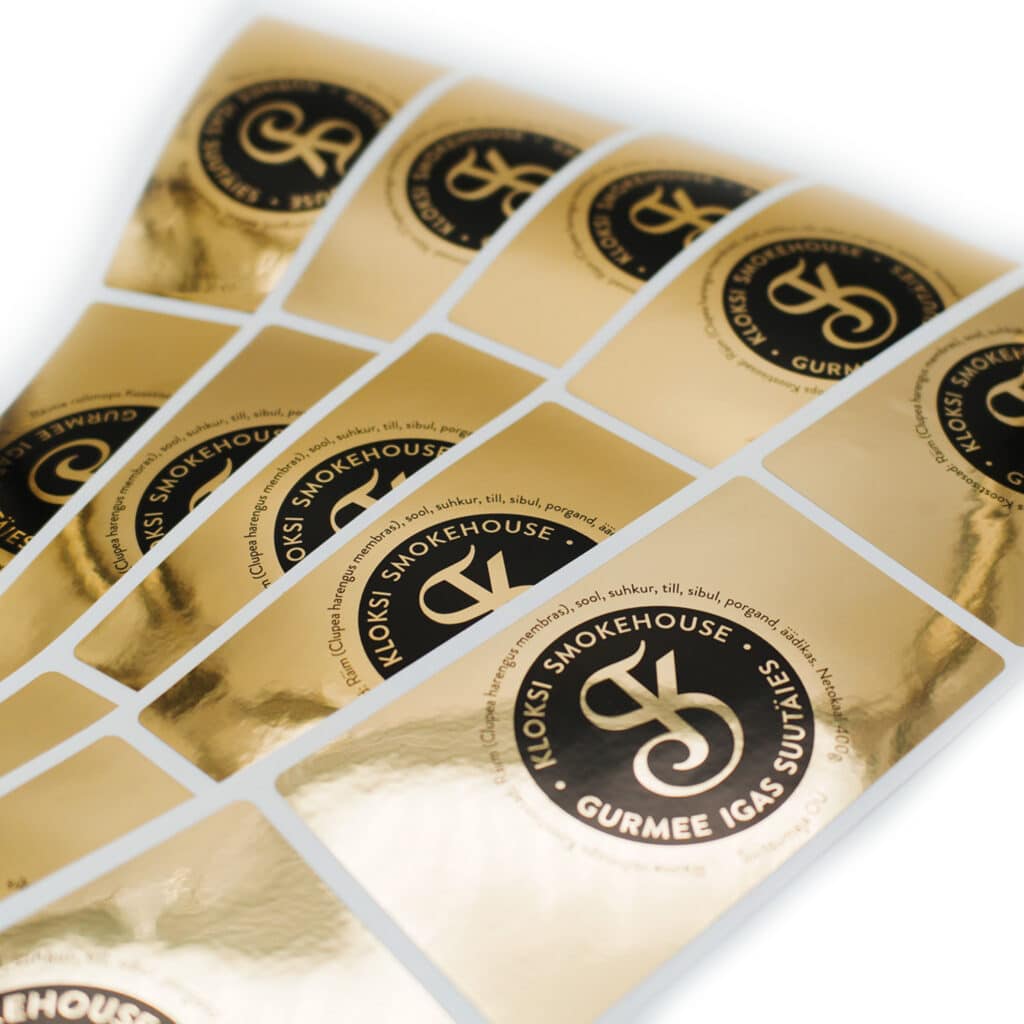
The material of a branded sticker can make a simple sticker special in an instant. For example, holographic material is a great way to liven up a simpler design. The holographic surface shimmers in the light and makes the sticker dynamic. If the design is minimalist (e.g. a single symbol, a short message or a simple graphic element), a holographic background will help it have more impact.
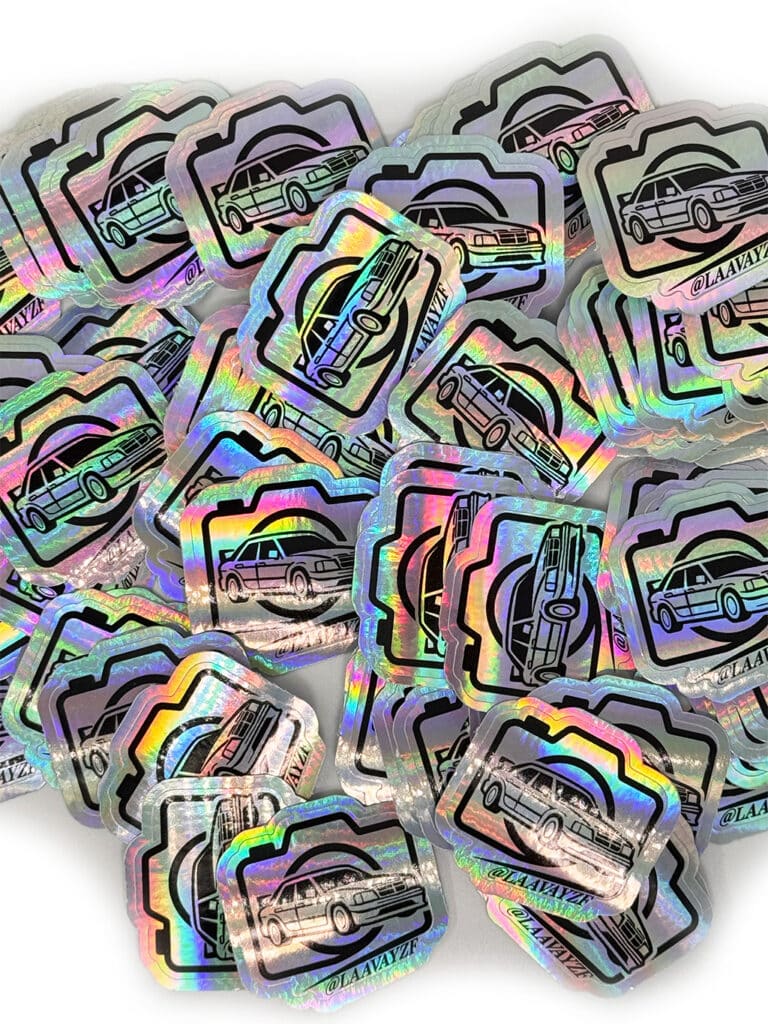
However, reflective material offers a completely different value – besides being decorative, it is also practical. In the dark, in the light of car headlights, such a branded sticker reflects light, making a bicycle, backpack, or pram more visible. If the branded sticker is useful, it travels with users daily and strongly promotes the brand.
Summary
A well-designed brand sticker considers the user, is simple and clear, evokes emotion, and matches the brand's visual identity. When complemented by a thoughtful shape and wisely chosen material, a small sticker can become an effective advertising medium that moves with users and catches the eye.
It is precisely for this reason that the design of a brand sticker is worth thinking about carefully. If you want to order eye-catching brand stickers and need designer help, then get in touch – we'll be happy to help!