



Notifiable stickers convey general information about the environment or conditions. They do not necessarily indicate an imminent threat, but they can help people to better understand the situation and to act correctly. For example, signage that informs about ongoing construction, traffic management or equipment use.
Required by law

Customer Rating 5.0
Safety Stickers, Warning Labels and Direction Signs
Safety and warning stickers quickly and clearly convey important information. This includes stickers that inform, warn, prohibit and oblige, as well as evacuation stickers and directional signs to guide people.
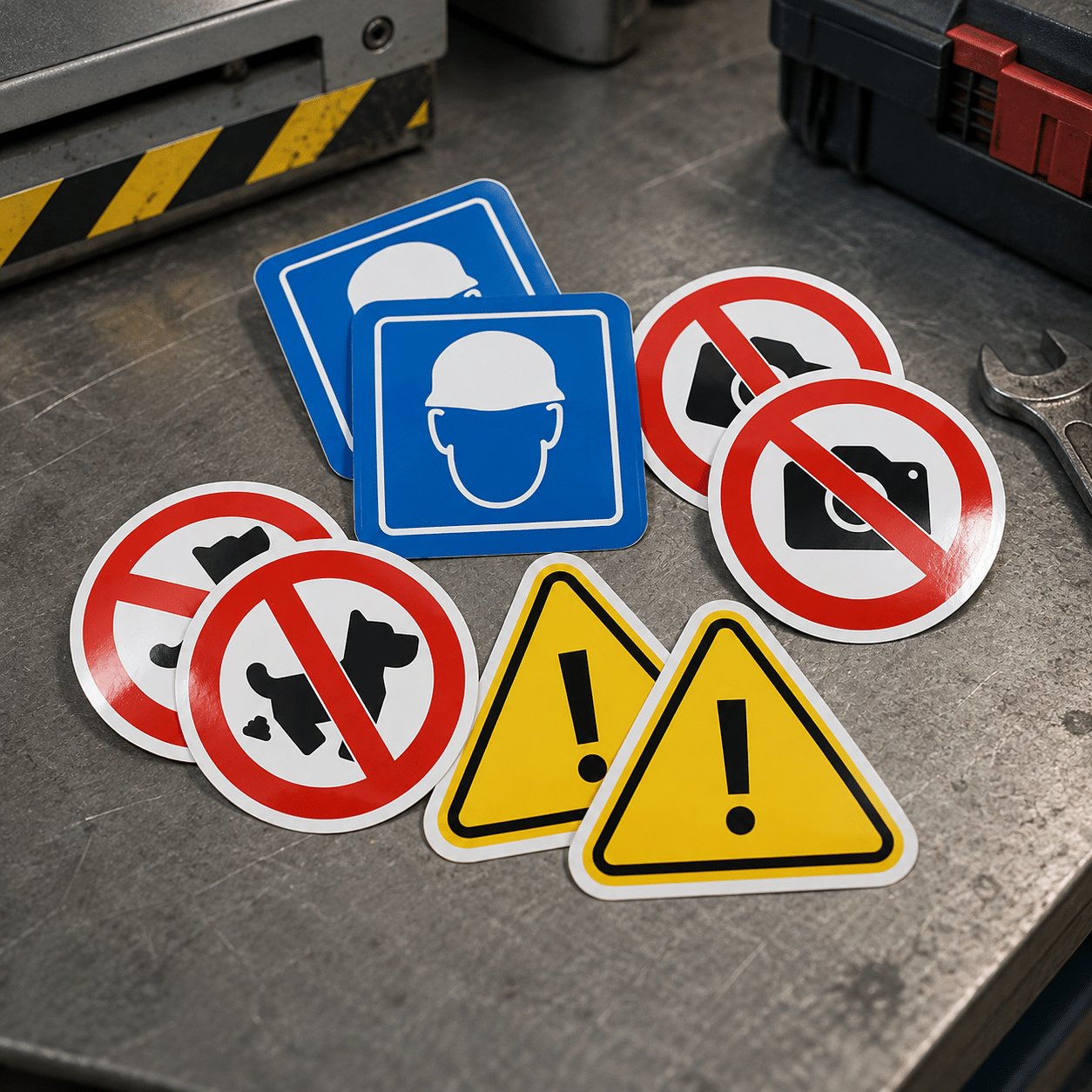
Whether it's a production hall, warehouse, construction site or public building, properly designed and placed safety stickers can help prevent accidents and ensure people know how to behave.
A well-thought-out safety sticker needs no explanation. It catches the eye, gets the message across in an instant, and works even when no one is giving instructions. These stickers are part of a safety system that works.
Safety stickers create a safe environment.
When people know where to go, how to behave, and what to avoid, the environment is immediately safer. Safety stickers are essential in any public space. Warning signs are Labour Inspectorate required by the pool, and you can find more detailed information about it on the danger signs page.
Fast and clear information
The safety sticker will be understood in no time. Clear symbols and contrasting colours help the message to get across quickly, even in low light conditions.
Helps prevent accidents
Slippery surfaces, hot equipment, moving machinery - a timely warning can prevent a serious accident.
Points to the right place
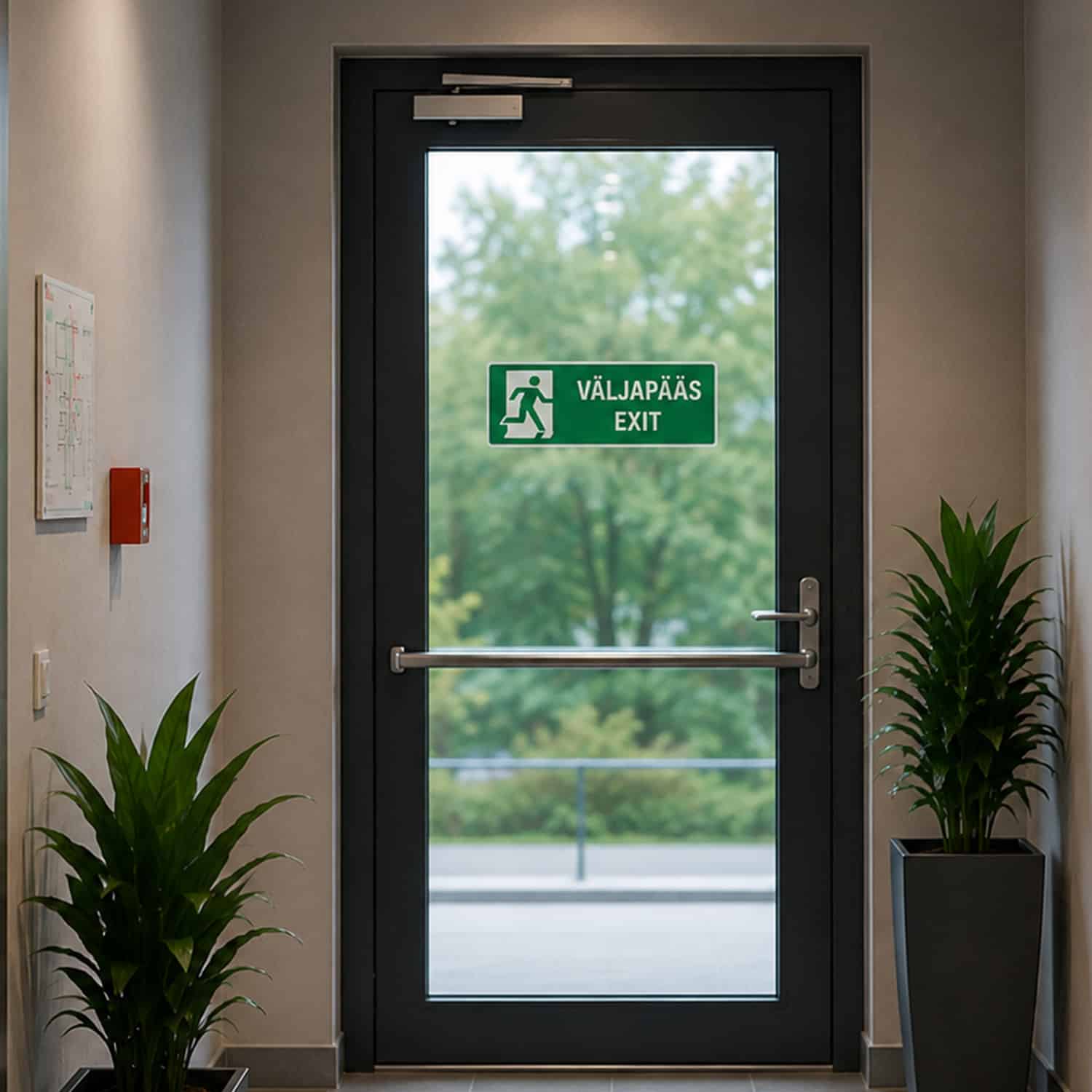
Evacuation routes, exits and fire extinguishers must be easy to find. Directional signs help people to quickly find their way around buildings of all kinds.
Works 24/7
The stickers are always visible and fulfil their role day after day and month after month.
Quick installation, cheap use
Installation is quick and easy, whether on walls, floors or various mechanisms and equipment. The price of the adhesive is always favourable compared to other solutions.
Easy to design
A safety sticker does not need a complicated design. Many of the common signs and symbols are already well established, and a workable solution is usually based on a clear and quickly understood visual.
Worth knowing
There are different types of safety stickers
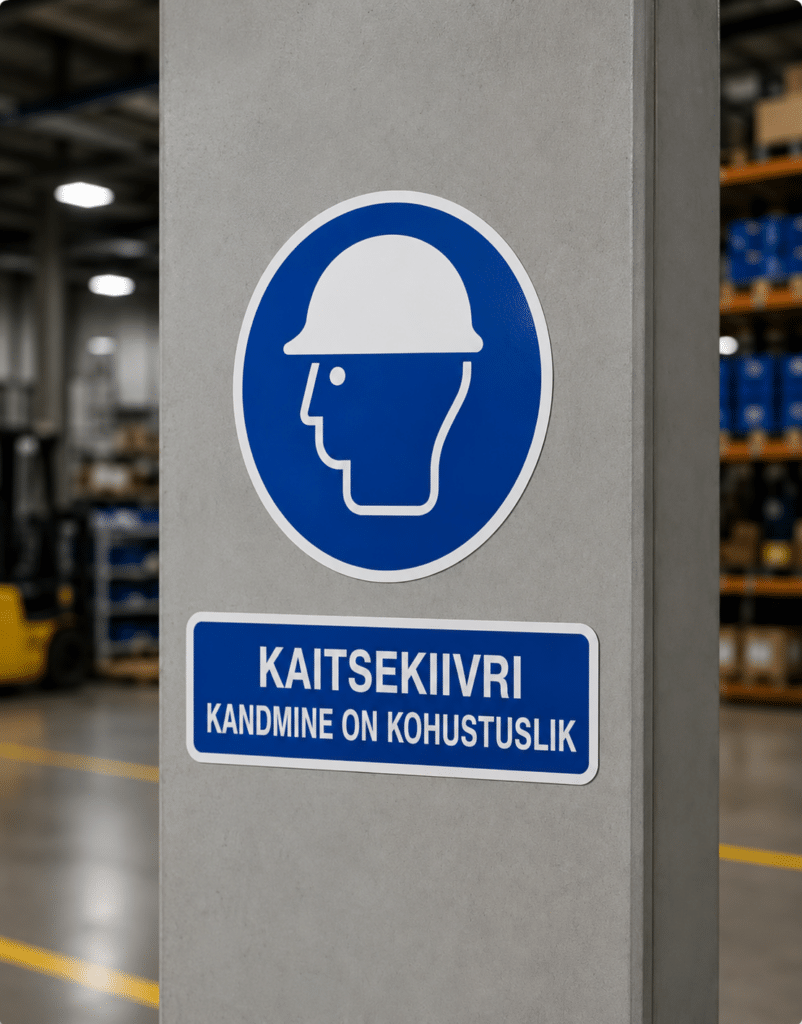
Safety stickers have different purposes: they inform, warn, prohibit, oblige or guide.
How to Design an functional safety stickers
Safety notices are not the place for creativity - clarity and comprehensibility are what count.
Easy to understand design. The goal of a functional sticker is to convey an important message within a second. Therefore, it is important to keep the design as simple as possible. Too much text or complex elements make it difficult to understand the message.
The right solution is often based on symbols and colours that are already established. The colours red, yellow and green are not chosen at random, but help to intuitively understand the message without reading the text. Whenever possible, it is worth using standard icons as they are mostly familiar to people and reduce the risk of misinterpretation.
Contrast and readability are also important. Light text on a dark background, or vice versa, ensures that the sticker stands out even in poor lighting conditions. The size of the sticker also needs to be considered – how far away does it need to be visible from? Smaller stickers are suitable for devices and more detailed labelling, while larger surfaces require a larger visual.
For the most part, designing a safety sticker isn't complicated. Many common signs and symbols already exist, and a workable solution lies in their correct selection and placement, not in creating a design from scratch.
Choose the right material. The choice of the material for the safety sticker is most important when considering the place and conditions of use. The right choice of material will prolong the life of the sticker and increase its effectiveness.
Plain stickers are suitable for indoor use and for places where they will not be subjected to constant wear and tear. These cost-effective decals will last for years under normal conditions and are a good choice for walls in all types of public areas and for large equipment in industrial buildings.
Laminated sticker is the right choice when the sticker has to withstand humidity, different weather conditions, cleaning or mechanical wear. Lamination protects the print and prolongs the life of the sticker. For example, for stickers to be applied to floors, this is a must.
Where safety stickers used
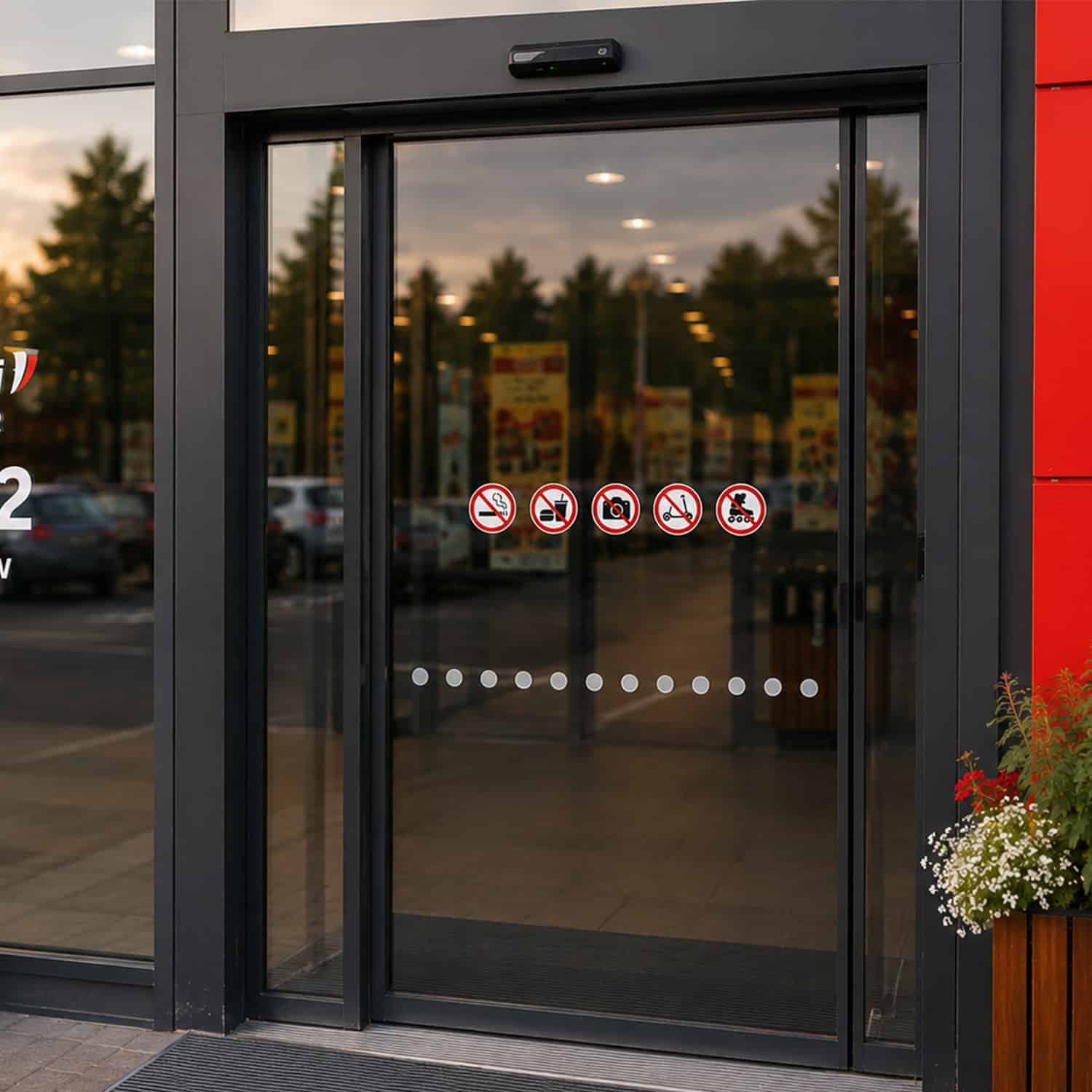
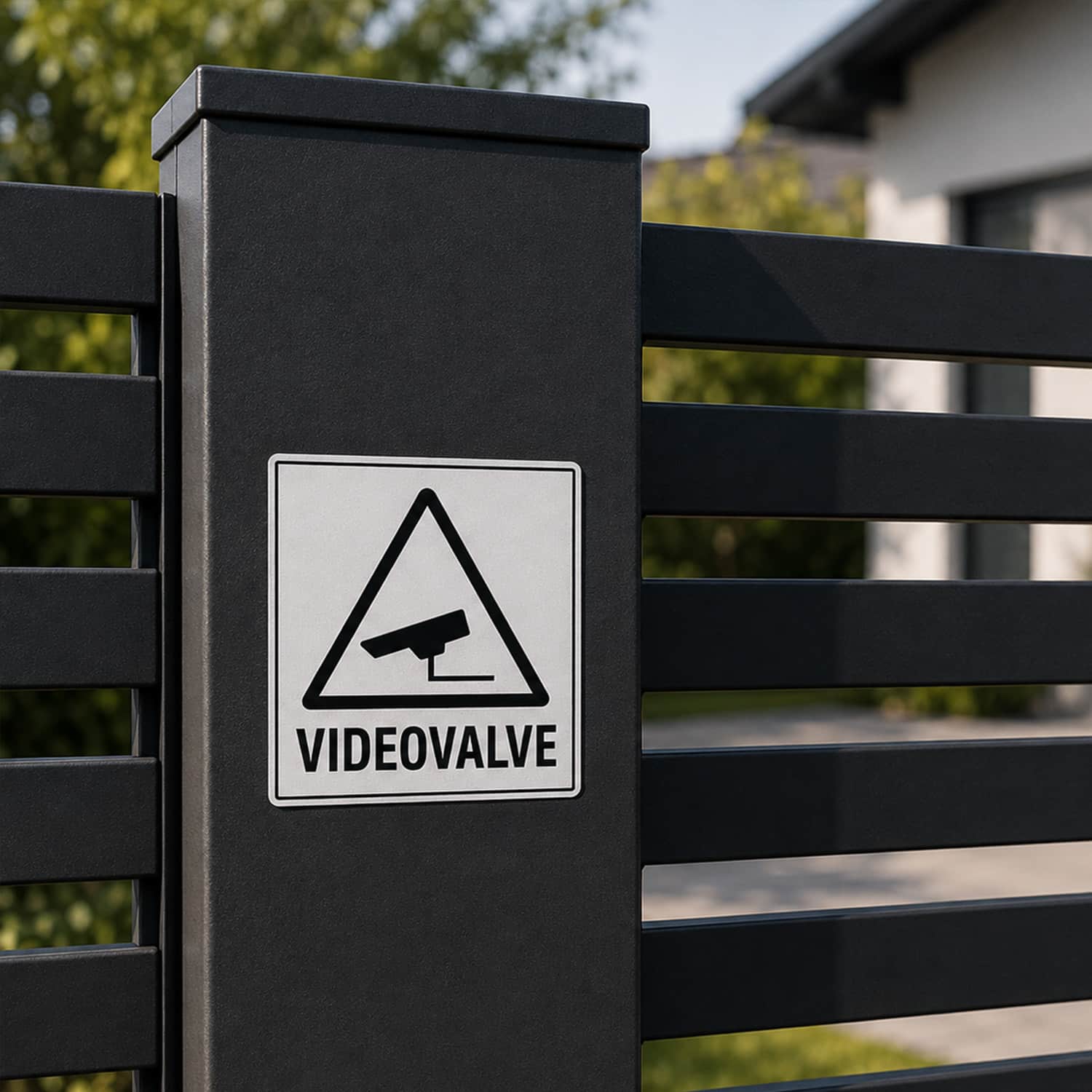
Different types of safety stickers are needed wherever people move around. Preventive, dissuasive and directional signage is what helps to prevent dangerous situations and makes it safe to be in an area.
Industry and manufacturing. Machinery, equipment and work areas need clear warnings and instructions so that workers know how to behave and avoid hazards. Correctly positioned stickers raise awareness of risks, help new workers adapt more quickly to the environment and support a culture of safety in everyday life.
Warehouses and logistics centres. The movement of forklifts, loading areas and pedestrian routes require clear signage. Safety stickers on the floor show directions of movement, danger areas and safe routes. This will help to keep movement smooth and safe.
Offices and public buildings. Evacuation routes, exits and the location of fire extinguishers must be clearly marked. In addition, in larger buildings it is a good idea to use directional signs to help people find their way around the space on a daily basis and reduce confusion.
Construction projects. Flexible, inexpensive and quick to install safety stickers are a good idea for construction sites. Stickers can be used to inform about dangerous areas, movement restrictions and mandatory safety equipment.
Commercial and service space. Signposting and access restrictions help avoid unpleasant or dangerous situations. High-visibility and easy-to-understand stickers increase customer safety and help staff to better control situations.