




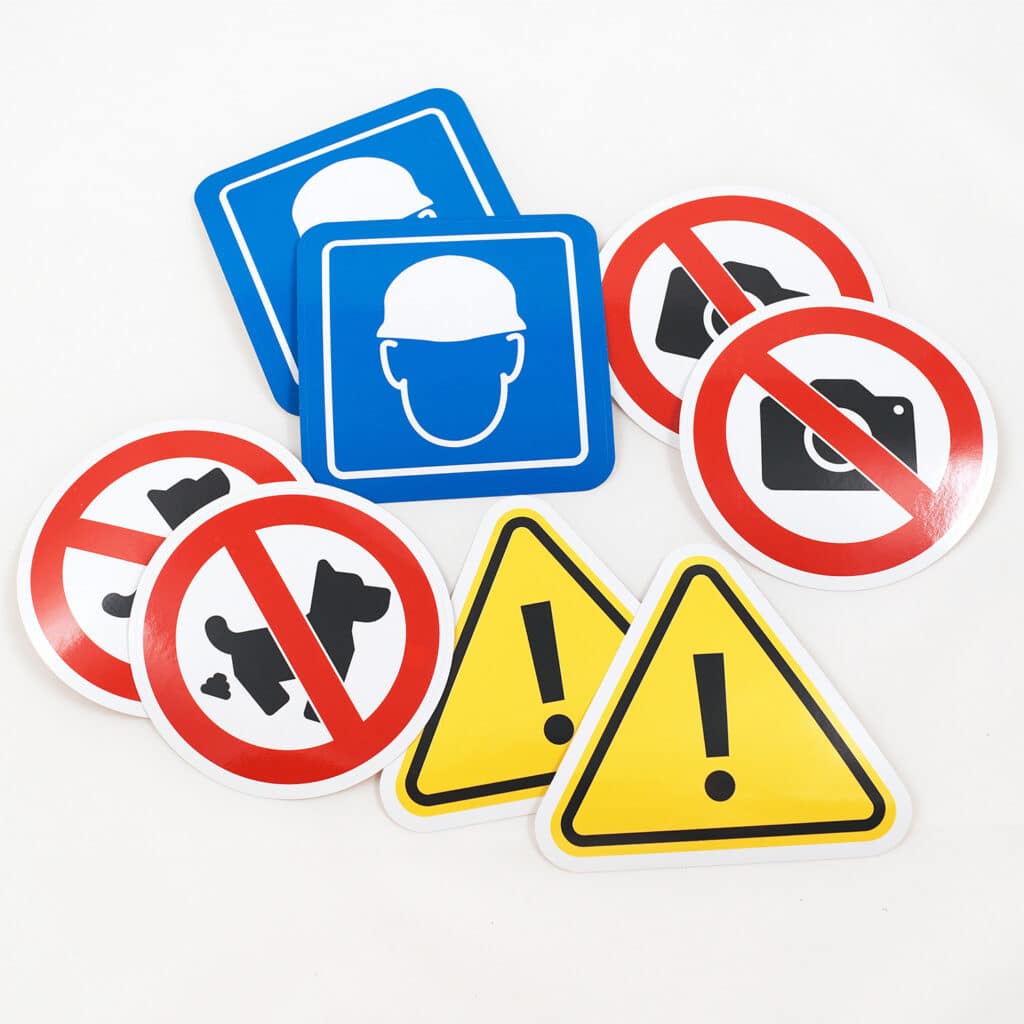
Safety is an important topic in any work environment, and therefore it is worth using simple solutions that help prevent accidents. One such solution is safety stickers. These are visual aids that draw attention to hazards, provide clear instructions, and guide people to behave correctly.
Whether it's a production facility, warehouse, office, or public space, situations can arise where clear signage can be of great benefit in ensuring safety. Safety stickers don't require lengthy explanations or instructions, as they convey the necessary information instantly. This is precisely what makes them one of the simplest and most effective ways to improve workplace safety.
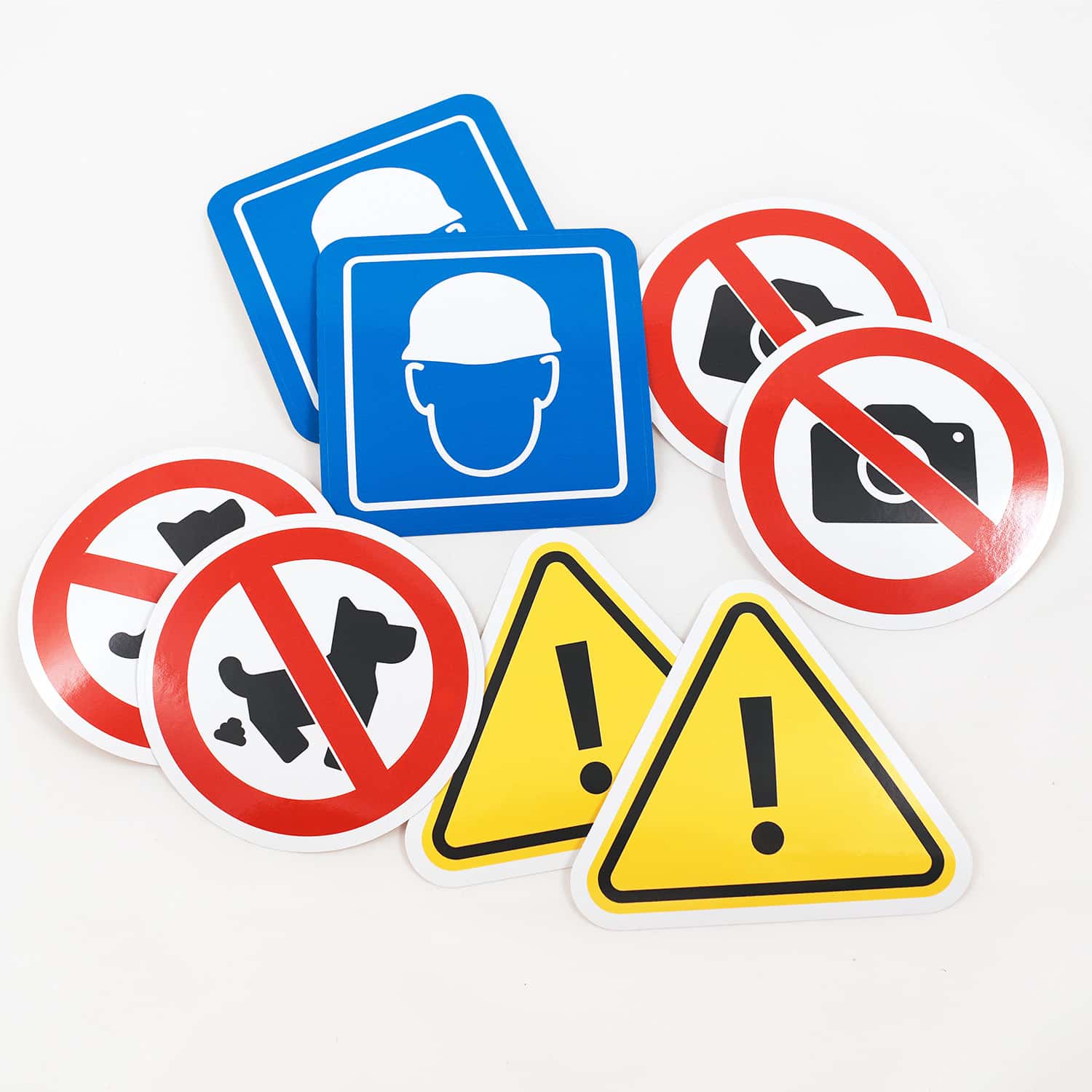
Slimming stickers convey information quickly and understandably
The purpose of a safety sticker is to convey essential information as quickly and clearly as possible. To achieve this, stickers mostly use universally recognized symbols or short instructions, which is why stickers are so effective. People don't have to stop or concentrate, as a single glance is enough to understand how to behave and what to avoid. For example, the electrical hazard symbol or the requirement to wear a helmet are visually so clear that they are universally understood even without text.
Where are safety stickers used
The uses of slimming stickers are very wide-ranging.
In production and industry Stickers are used on machinery to warn of moving parts, high temperatures and other hazards. They help workers be aware of potential risks and to avoid them.
In warehousing and logistics Roads and dangerous areas are marked with stickers. Clear information improves work organisation and makes traffic safer for everyone.
In offices and public spaces Safety stickers are used for marking evacuation routes and exits, for example. At the same time, stickers can also be used to give instructions in offices. For instance, a sign with the text “Wash your own mug, as your mother doesn't work here” makes life easier for everyone.
Building sites Thinning stickers are essential. They provide information on mandatory safety equipment, mark hazardous areas, and inform about risks.
Common mistakes in using safety labels
A thinning sticker is installed with a specific purpose, and therefore it makes sense to monitor that the sticker fulfils this purpose. It is certainly worth avoiding the main mistakes that people tend to make when ordering stickers.
Stickers are too small. If the marking isn't large enough, it might not be noticed in time. A safety sticker must be findable and visible to function correctly.
Layout value. A thin sticker placed where the eye naturally doesn't fall often goes unnoticed. Furthermore, when applying stickers, it's worth ensuring they aren't placed too low or too high. Stickers placed at eye level, around 150–170 cm from the floor, work best. The gaze usually moves automatically within this zone.
It is important to also consider the environment. For example, in production or in a warehouse where people work with machines or forklifts, the natural field of vision might be higher.
Too much information. The aim of a safety sticker is not to provide comprehensive instructions, but to convey a quick and clear warning, prohibition, or order. It is not a place for long texts. Often, the best solution is a widely recognised symbol and, if necessary, a two- or three-word instruction.
The material is important. Naturally, safety stickers can be printed on paper and then attached to the wall using adhesive tape. However, this is quite an archaic and not very reliable solution. It is better to make a small investment and order proper safety stickers that will last a long time, are highly visible thanks to bright colours and glossy material, and do not come off the walls easily.
If the sticker is located in a place where it can easily get damaged, then it is a good idea to laminate it. A laminated sticker withstands scratches and mechanical wear well. In difficult conditions, the sticker's lifespan will be longer thanks to this.
Should you choose an off-the-shelf solution or a custom-made one?
In many cases, standard safety labels using universal symbols are sufficient. These are well-suited for marking conventional work processes and hazards.
However, there are also situations where custom-designed safety stickers are worth considering. A special order is particularly necessary when the company's work organisation includes specific steps or hazards for which universal signs are lacking. For instance, specific machines or mechanisms may be in use that require customised safety signage. Special orders make it possible to add text to symbols and use less common visual elements.
When ordering custom-made thin stickers, the customer has greater freedom in choosing the size, shape, and material of the label. Non-standard surfaces or complex working conditions may require non-standard solutions, such as resistance to high temperatures or humidity. In such cases, a custom order ensures that the stickers will last and serve their purpose for longer.