



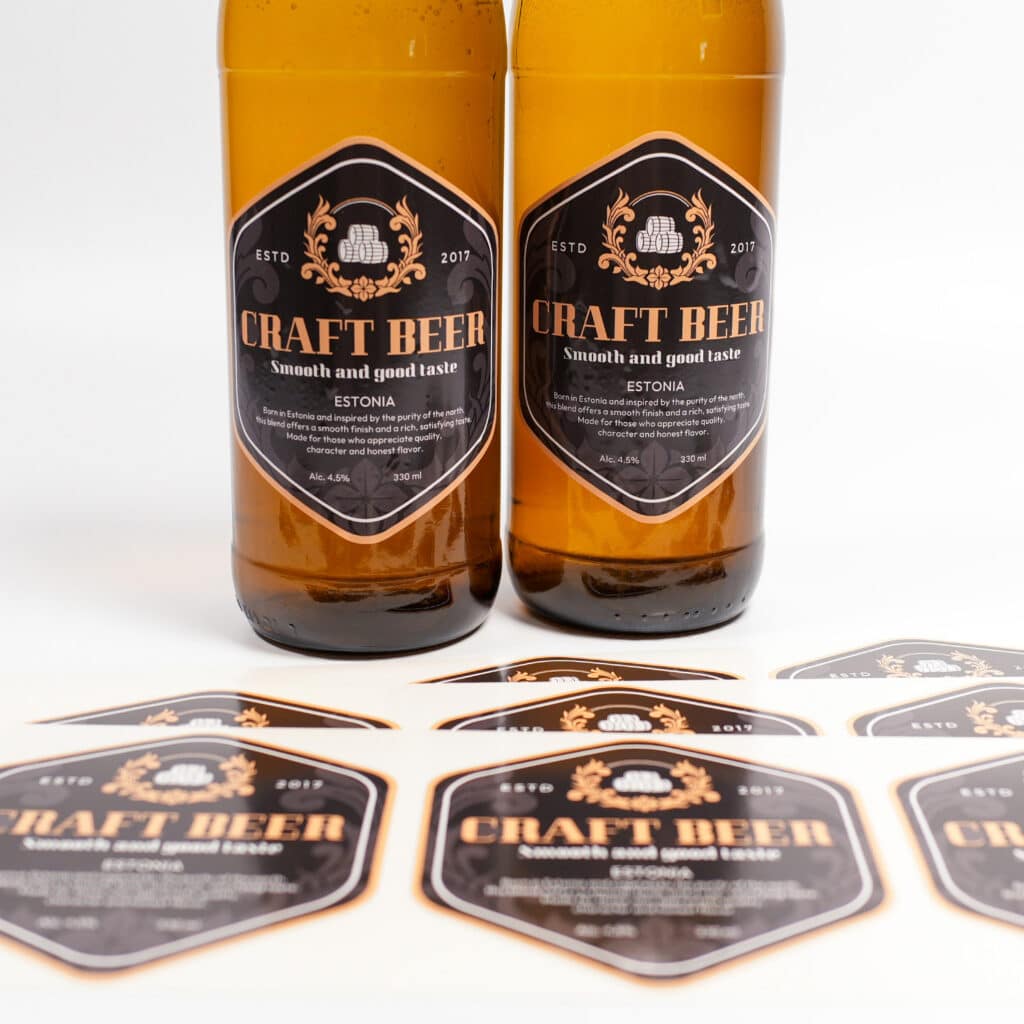
The product is, without a doubt, important – its appearance, ingredients, and quality. But the purchasing decision is often made long before reaching the product. Because before a customer has the opportunity to taste or examine the product more closely, they have already formed an opinion as to whether the product is “worth its price” or not.
This assessment is made in a matter of seconds, with the product label doing most of the work. The same product can appear carefully crafted and reliable with one label, yet seem haphazard or cheap with another. The product label is the customer's first interaction with the product, and often the reason why one product is picked up from the shelf and another is left behind.
Product labelling shapes the first impression
When a shopper sees a product for the first time, they don't delve into the details. They glance at the packaging and immediately know what they think and feel. Does this product seem high-quality? Is it reliable? Is it worth the price?
All these decisions are made in an instant based on the product label's design, colours, and overall appearance. A high-quality label with a well-thought-out design creates the impression that the product itself has been made with the same care. Conversely, a cheap-looking label raises doubts, even if the product itself is actually very good.
The product label immediately creates an impression of the product's price. If the product label appears high-quality, it is easier for the customer to accept a higher price. This seems entirely logical and reasonable. However, if the label gives a haphazard impression, the customer often finds the price too high as well.
Manufacturers don't invest in the design and production of packaging and product labels for no reason.
The product label is the carrier of the brand's visual identity
In addition to the logo and name, brands are also experienced through packaging and product labels. A consistent style for labels (the same colours, fonts, and layout) makes products distinctive and recognisable.
This is beneficial for both customers and manufacturers. The customer immediately recognises the product and doesn't have to think each time about which brand they are dealing with. From the manufacturer's perspective, it is a system where each new product does not start from scratch but relies on an already established brand image. In the long run, this means that it's not just the product that is sold, but established quality and trust.
The product label as a creator of emotion
People don't just choose products based on what they do. The emotion that the packaging and product label evoke also plays a role in the choice.
Colours, fonts and design can be used to create an appropriate mood – whether it's a rustic farm product or a high-quality boutique brand, for example. The content can be the same, but the feeling is completely different. Visual language makes the choice easier for the customer and gives the product a story and meaning.
This is particularly important for small producers, where individuality and uniqueness are their greatest advantages. A well-thought-out label helps to highlight the product's origin and strengths, giving the customer assurance that they are not just buying any old product, but are supporting a small producer they like.
Ultimately, the purchase decision is rarely made on logic alone. The product must also evoke the right feeling and tell a story that resonates.
Beauty is important, but practicality is essential
A beautiful design alone is of little use if the product label is not durable and functional. The label must not wear out quickly, come loose, or become unreadable, as then the message and impact on the customer will also be lost.
Sticker material is an excellent choice for product labels as it is moisture- and frost-resistant and, compared to paper labels for example, also extremely durable. Kleepsud.ee The product labels produced by the pool stand out for both their print quality and durability.
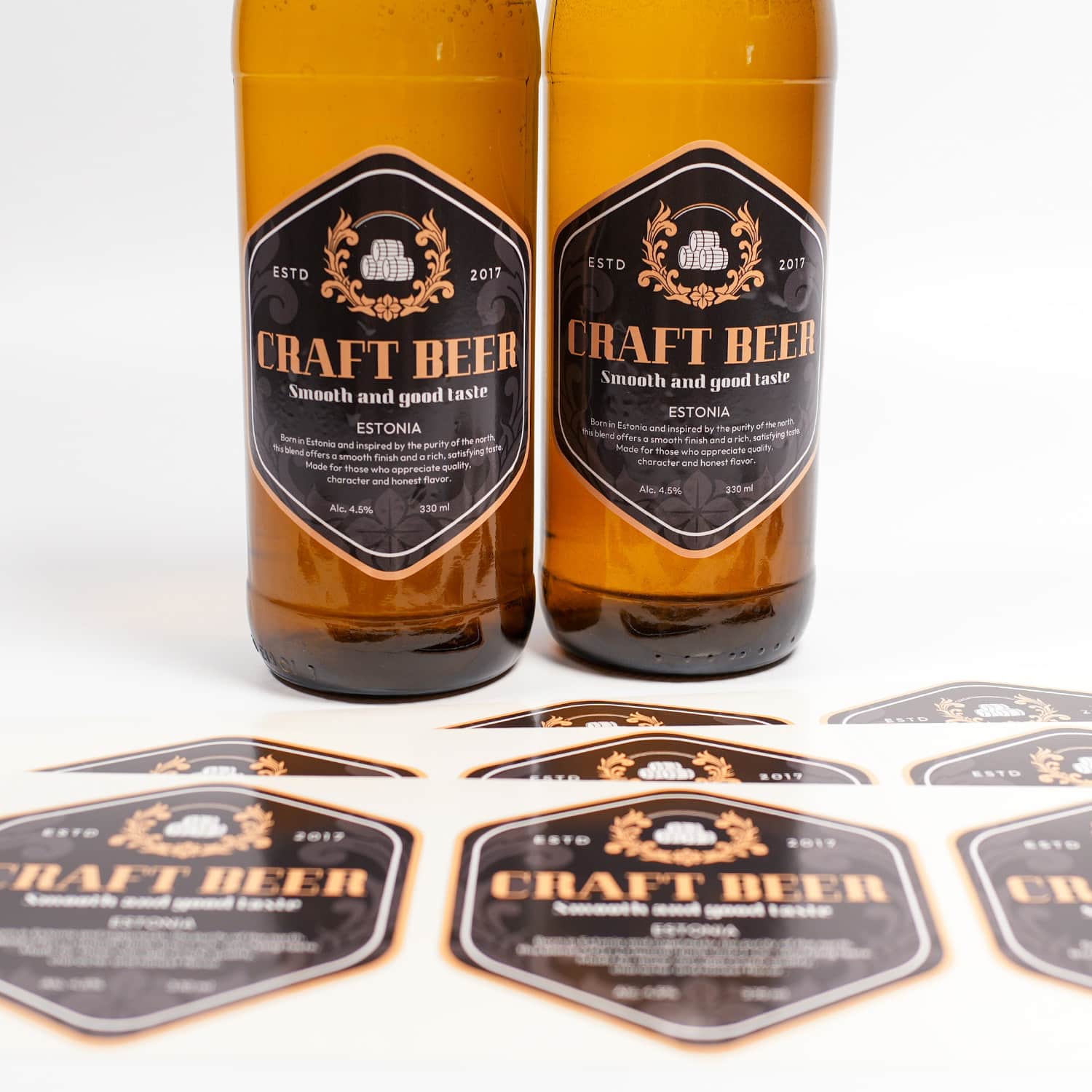
Using self-adhesive labels offers great additional possibilities in label design. For example, you can choose between a glossy and a matt film. On glossy film, colours remain bright and eye-catching, while matt film appears elegant and luxurious. Transparent film can be used on glass containers, giving an airy impression.
When it comes to labels, it's important to ensure that all the information on the label is clear and legible. This applies not only to text but also to brand names, logos, and other symbols. If a customer has to strain to read something, both trust and interest will be lost.
Small detail, big impact
The product label is the first point of contact with a potential customer and, despite being a small detail, it determines a large part of the perceived value of the product. A well-thought-out product label creates a first impression, supports pricing, strengthens the brand, tells a story, and provides information.
Every detail – colour, font, material, layout – is important to make a product distinctive and valuable. Ultimately, a small product label is what turns a product into a well-thought-out experience that a customer will value and remember.